
6-Day Beginner Paramotor Course in Mid and West Wales (Foundation Training)
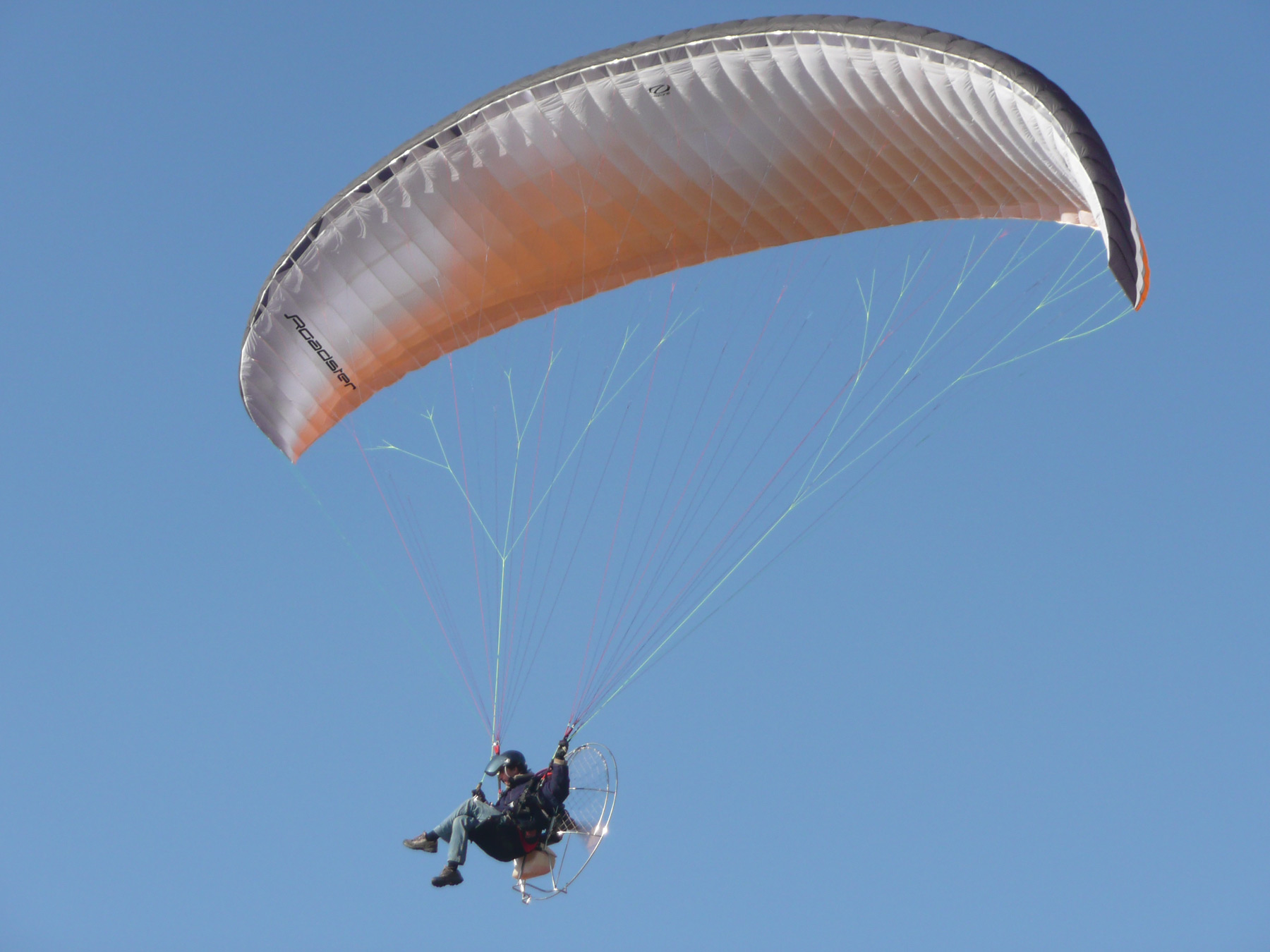
If you want to learn properly, this 6-day beginner paramotor course in Mid and West Wales gives you a structured, safety-led start. Instead of chasing quick results, we build the habits that keep you safe. First, you learn paraglider wing control. Next, you add power preparation. Finally, you progress to first powered flights only when you meet the standard and conditions are suitable. As a result, your training stays calm, repeatable, and realistic.
Quick facts
- Duration: 6 training days
- Location: Mid and West Wales
- Suitable for: total beginners (no experience needed)
- Training style: calm, direct coaching with safety margins kept intact
- Equipment: provided (wing, harness, helmet, paramotor and training kit)
- Before booking: call/WhatsApp +44 7779 790 637
Important: this is foundation training (not the full licence route)
SAVE £700 On this course add our equipment + Training Package
This 6-day course is designed as a strong foundation. However, if your goal is the full BHPA licence-style route to safe solo standard, you’ll want our longer pathway. In that case, go straight to the BHPA Club Pilot Paramotor Course in Wales (10 days). That option is longer on purpose because it includes more consolidation, more flying, and the exam pathway.
Who this course is for
- Total beginners — no experience needed, so you can start from a clean slate.
- People who want a recognised training pathway, rather than random “tips”.
- Anyone who takes safety seriously and wants calm, repeatable instruction.
How the training works (smart progression)
Powered flying is still paragliding. Therefore, the wing must come first. Good pilots don’t rely on power to fix weak launches; instead, they control the canopy properly from the start. Once you can inflate, stabilise, run, steer, and land reliably, adding the motor becomes safer and more predictable. In other words, we build competence first, and confidence follows.
What you’ll learn on this beginner paramotor course
- Safe routines: daily inspections, pre-flight checks, and disciplined launch/landing procedures
- Ground handling: kiting, overhead control, directional control, safe aborts
- Flight fundamentals: straight flight, controlled approaches, accurate landings (progressive)
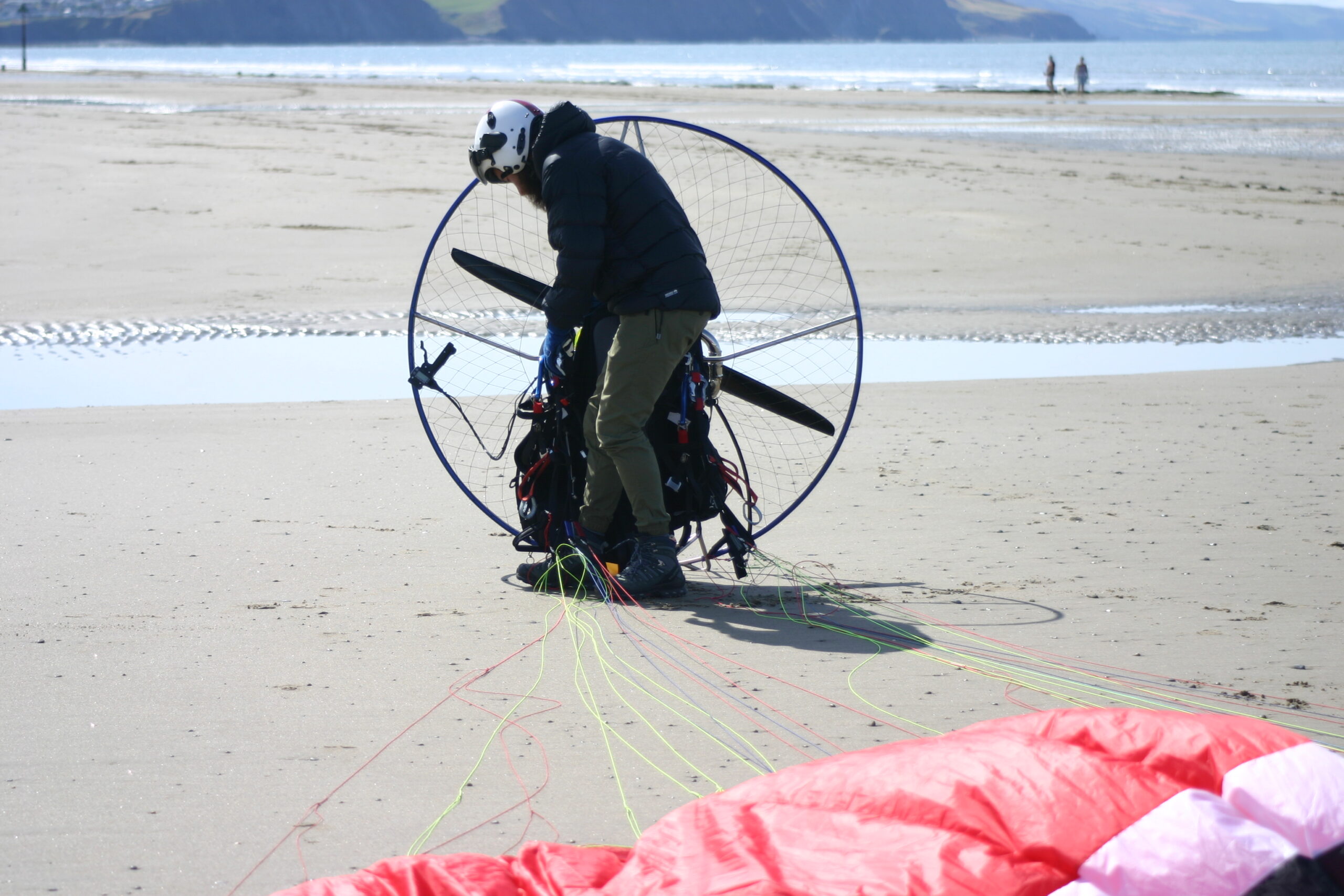
- Power unit knowledge: hazards, controls, rigging, starting/shutdown routines
- Decision-making: weather assessment, site selection, and “what if” planning before take-off
6-day course structure
Day 1 — Power unit + safety systems (ground-based)
Before you ever fly with an engine, we make the power unit familiar and boring. That matters, because most preventable incidents start on the ground.
- Welcome, course structure, and training plan.
- Safety briefing: weather factors, risk management, emergency procedures.
- Propeller and fuel hazards: clutch behaviour, safe handling, danger to self and others.
- Stopping procedures: kill switch, shutdown routine, emergency stop.
- Fire procedures (ground response plus in-flight discussion).
- Unit familiarisation: components, assembly/packing, safety cage condition, daily inspection items.
- Controls: ignition, throttle, choke, starter mechanism, harness controls.
- Correct rigging to the glider with safety straps (manufacturer method) and pilot adjustments (weight/thrust angle).
Day 2 — Paraglider introduction + ground handling
Next, you build the core skill that makes everything else easier: wing control. Even a basic launch becomes safer when the canopy is stable overhead.
- Site selection and suitable conditions.
- Ground handling: kiting, overhead control, directional control, safe aborts.
- If conditions allow: first short supervised flights (launch, straight flight, landing).
Day 3 — Consistency and safer launches
After that, repetition is the point. You’ll consolidate the early steps until they become reliable rather than lucky.
- Consolidate early flights and introduce gentle turns.
- Improve launch technique and canopy control under coaching.
- Pre-flight checks drilled until disciplined and repeatable.
Day 4 — Skill development (control + landings)
Then we tighten your accuracy. Better control improves decisions, and better decisions keep flying safer.
- Ground handling refinement (as conditions allow).
- Progress turns up to 90° (less than 180°) with good lookout and airspeed control.
- Defined-area landings and safe approach planning.
- Personal feedback focused on technique and risk awareness.
Day 5 — Theory + power preparation
Meanwhile, you cover the theory that stops you becoming a “fair weather guesser”. Understanding conditions is not optional in paramotoring.
- Principles of flight (basic aerodynamics).
- Meteorology: wind, pressure, temperature, cloud, and what matters in real flying decisions.
- Airmanship: planning, safe habits, rules, and good practice.
- Power preparation: wearing and starting the motor without flying.
- Torque and primary effects (engine running, no wing): feel and manage handling safely.
Day 6 — Powered flight prep + first powered flights (progressive)
Finally, you combine wing skills with power in a controlled, progressive way. If standards and conditions aren’t right, we do not force it.
- Full launch procedure: runs and abort discipline (wing + thrust, no forced take-off).
- Pre- and post-flight routines performed correctly.
- Eventualities briefing: engine-out plan, comms failure plan, early landing decision points.
- Commands and communications: radio use, signals, and what to do if comms fail.
- If standards are met and conditions are right: first powered flights, safely and progressively.
Safety standards (how we keep this sensible)
Conditions decide what we do. For example, if the wind strength, direction, or turbulence risk is wrong, we switch to ground training, theory, or power preparation instead of pushing on. Likewise, if your technique is not yet consistent, we slow it down and rebuild the basics. As a result, you make progress without cutting corners.
What’s included
- All equipment provided: wing, harness, helmet, paramotor and training kit.
- Course materials and supporting resources.
- Close supervision, coaching, and daily feedback.
FAQs
Do I need any experience to start?
No. This is a true beginner paramotor course in Mid and West Wales, so we assume you’re starting from zero and build from the ground up.
Will I definitely do powered flights on Day 6?
Not automatically. If you meet the standard and conditions allow, then yes, we progress. However, if the weather or safety margins aren’t right, we switch to training that still moves you forward.
Is this the full BHPA licence route?
No. This 6-day course is foundation training. If you want the full route, use the BHPA Club Pilot Paramotor Course in Wales (10 days).
Next steps (choose the right route)
- BHPA Club Pilot Paramotor Course in Wales (10 days) — the full beginner-to-solo pathway.
- All Paramotoring Courses — compare your options.
- 1-Day Paramotor Taster — quickest intro.
Useful official resources
Book your place
Places are limited because coaching quality matters. Before booking, call/WhatsApp +44 7779 790 637 so we can confirm suitability, timing, and expectations.


