
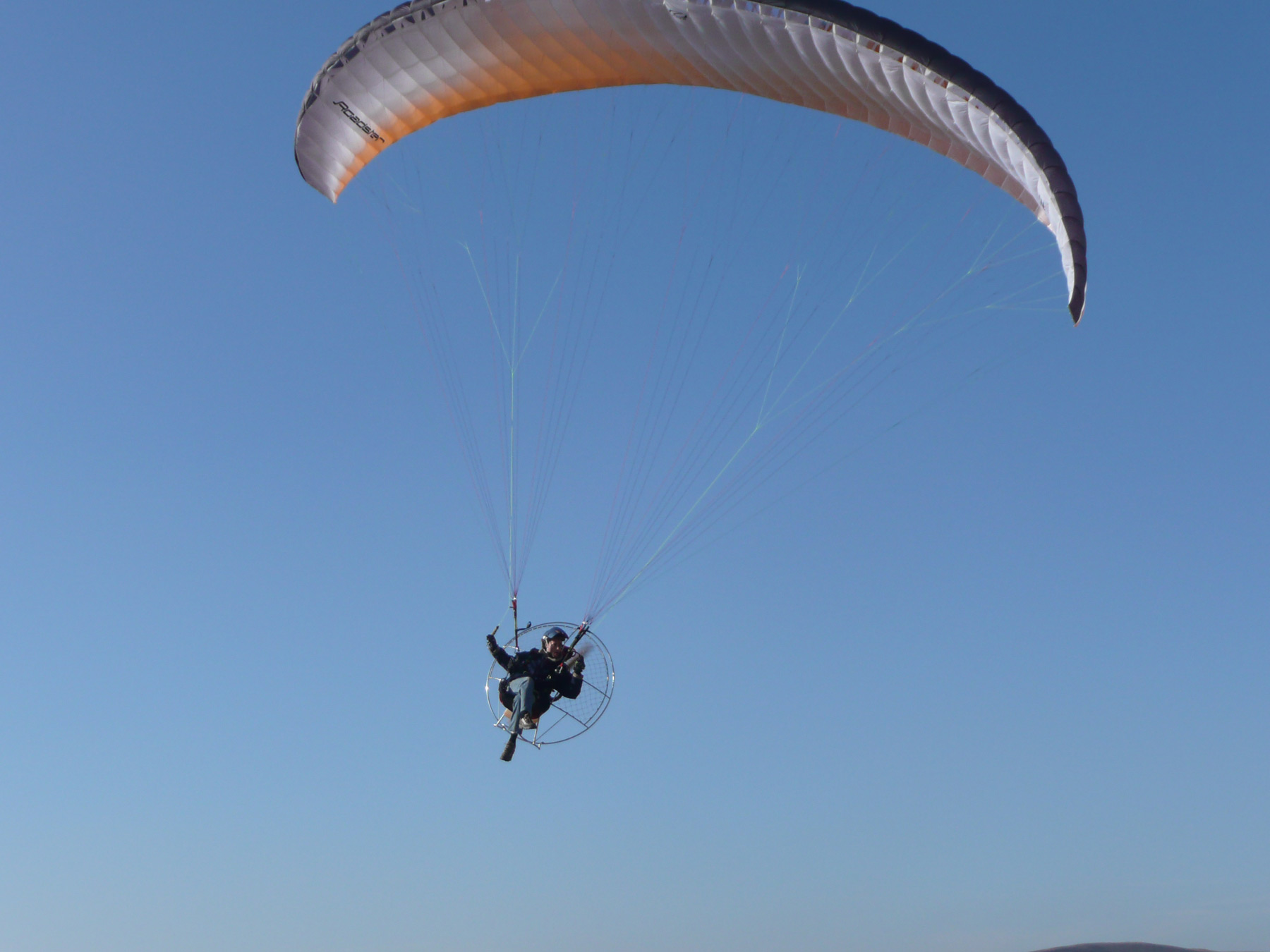


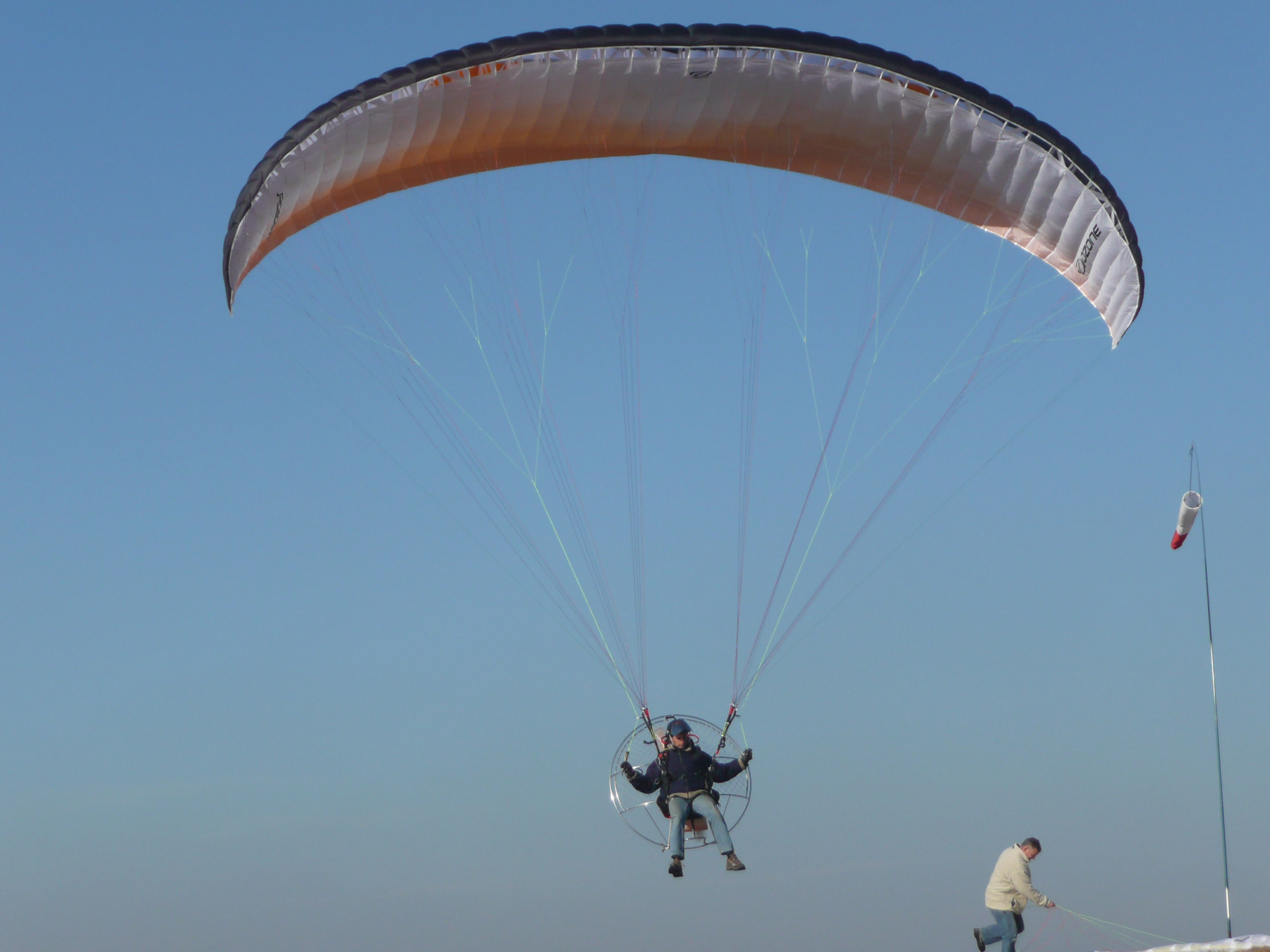
BHPA Club Pilot Paramotor Course in Wales (10 days)
If you want to learn paramotoring properly, this is the structured route. We teach you from zero through the skills, judgement and discipline you need. Most importantly, we build your decision-making alongside your flying, because that’s what keeps you safe when you’re not being supervised.
Who this course is for
- Total beginners (no experience needed), so you can start from a clean slate.
- People who want a recognised training pathway, rather than random “tips”.
- Anyone who takes safety seriously and wants calm, repeatable instruction.
What you’ll be able to do by the end
This course aims to bring you to a safe, responsible solo standard. Therefore, we focus on repeatability: consistent launches, stable flight, and predictable landings. In addition, you’ll learn how to plan flights and stay within sensible limits, because “can fly” is meaningless without “can choose not to”.
You will train:
- Ground handling that actually works: inflation control, directional control and safe aborts. As a result, launches become boring—in a good way.
- Launch + landing: repeatable take-offs, stable approaches and controlled landings. Meanwhile, you practise engine-off landings so you can deal with the obvious risk.
- Airfield management: discipline, circuits, separation and site safety. Consequently, you stop drifting into bad decisions under pressure.
- Power skills: torque awareness, safe starting procedures, fuel handling and a basic maintenance mindset. In other words, you learn to fly and to operate.
- Theory that keeps you alive: meteorology, air law, navigation and flight planning. For example, we cover conditions that look “fine” but bite later.
How the 10 days typically run (realistic progression)
We don’t rush you. Instead, you earn each step by doing the basics correctly. Because conditions vary, the order may shift slightly; however, the progression stays the same: control first, power second, judgement throughout.
- Day 1: safety, equipment overview and inspections. Then we cover site assessment and weather basics, so you understand what you’re looking at.
- Days 2–4: intensive ground handling and unpowered training. As a result, you build wing control before adding the engine.
- Day 5 onward: powered flights begin when you’re ready. After that, we repeat take-offs and landings until they’re consistent, not lucky.
- Later days: higher flights, planning, and controlled repetition. Additionally, you practise decision-making under changing conditions.
- Final day: assessment and next steps. Therefore, you leave with a clear plan, not just a vague “good luck”.
Reality check: progress depends on weather and your preparation. So, if you turn up unfit, unprepared, or trying to shortcut the basics, you slow yourself down and everyone else.
Exams, membership and what the qualification means
You will complete 3 multiple-choice theory exams. This matters because knowledge prevents predictable mistakes. In addition, BHPA membership is typically required while training at a BHPA registered school.
- Exams: 3 multiple-choice exams; therefore, you’re not just copying actions—you understand them.
- Membership: BHPA membership is required for training, so your cover and framework are in place.
- Power qualification: it is for solo flight only; consequently, no passenger/tandem flights.
Training location
We train in Mid Wales. Because location and conditions matter, we’ll confirm your training plan and meeting point when you book.
Equipment options
You can train on your own kit or ours. Either way, we teach disciplined setup and checks. As a result, your habits stay consistent even when you change gear later.
- Paramotor Day Taster — if you want a first taste before committing.
- Paramotor Two-Day Taster — if you want more time on the basics.
- Club Pilot Power Course Spain — if you want an intensive, weather-friendly block.


